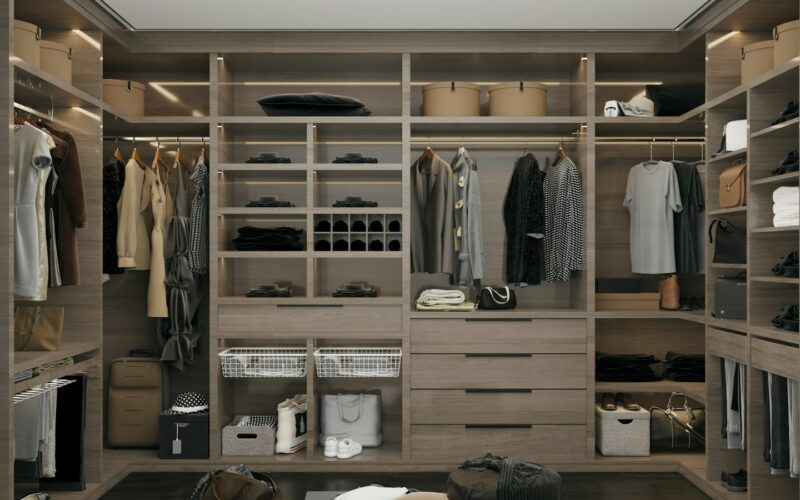
If your closet is stuffed but you still feel like you have nothing to wear, you’re not alone. Over time, clothes pile up: things that no longer fit, impulse buys with the tags still on, pieces you’re keeping “just in case.” The result is a crowded closet that makes getting dressed harder, not easier.
Decluttering fixes that. Done well, it leaves you with a closet full of clothes you actually wear, with space to see them. This guide walks you through a simple method for deciding what to keep, what to donate and what to sell, plus how to stop the clutter from creeping back.
Before you start: set yourself up for success
A closet cleanout goes much better with a little preparation.
- Block out time. A full declutter can take two to four hours. If that feels like too much, tackle one category at a time over a week.
- Gather supplies. You’ll want a few bags or boxes labeled Keep, Donate, Sell, Repair and Recycle, plus a full-length mirror.
- Clear a surface. Your bed works well. Seeing everything in one place is part of the process.
- Pick the right moment. Choose a time when you’re not rushed or stressed. Decisions are easier when you’re rested.
Step 1: Empty one category at a time
Rather than emptying the entire closet at once, work by category: tops, then pants, then dresses, outerwear, shoes and accessories. Taking every item of one type out lets you see how many you really own. Many people discover they have five nearly identical black tops or a dozen pairs of jeans they never wear.
Seeing the full collection makes duplicates and forgotten pieces obvious, which is half the battle.
Step 2: Ask the right questions
For each item, hold it up and ask yourself a few honest questions:
- Have I worn this in the last year? If not, why not?
- Does it fit me well right now? Not “after I lose five pounds,” but today.
- Do I feel good when I wear it?
- Is it in good condition? Look for stains, pilling, stretched fabric or broken zippers.
- Does it go with other things I own? A piece that matches nothing rarely gets worn.
- If I saw it in a store today, would I buy it?
If an item gets mostly “no” answers, it’s probably time to let it go. If it’s a clear “yes,” it goes back in the closet.
Step 3: Sort into five piles
Keep
Clothes you love, wear regularly, and that fit well. These earn their space in your closet.
Donate
Good-condition items that simply aren’t right for you anymore. Local charities, shelters and community clothing drives often welcome clean, wearable clothing. Check what each organization accepts before dropping off, as many have specific needs by season.
Sell
Higher-value pieces in excellent condition, such as designer items, quality outerwear or barely worn shoes, may be worth selling. Online resale platforms, local consignment stores and community marketplaces are all options. Be realistic about your time: if listing and shipping feel like a chore, donating might be the better choice.
Repair
Items you love but can’t wear right now because of a missing button, a loose hem or a broken zipper. Set a deadline. If you haven’t repaired them within a month, they move to the donate pile.
Recycle
Clothes that are too worn, stained or damaged to donate. Many municipalities and some retailers offer textile recycling, so these items can avoid the landfill.
Step 4: Handle the tricky categories
Some items are harder to decide on than others. Here’s how to think about the usual suspects.
Sentimental pieces
A concert tee, a parent’s sweater, the dress from a special day. You don’t have to get rid of these, but they don’t need prime closet space either. Keep a small memory box for the most meaningful items and store it separately.
“Someday” sizes
Clothes that might fit again one day often cause guilt every time you see them. If you want to keep a few, store them out of sight and revisit in six months. Your everyday closet should hold what fits now.
Expensive mistakes
It’s hard to part with something you paid a lot for but never wear. The money is already spent; keeping the item won’t bring it back. Selling it can recover some of the cost, and someone else will actually enjoy it.
Special occasion wear
Keep one or two versatile formal outfits rather than a whole collection of event dresses you’ll likely never repeat.
Step 5: Put your closet back together with intention
Once the sorting is done, return your “keep” pile to the closet thoughtfully:
- Group items by category, then by color, so they’re easy to find.
- Put the things you wear most at eye level and within easy reach.
- Use matching slim hangers to save space and give the closet a calmer look.
- Store off-season clothes in bins under the bed or on a high shelf.
This is also a great time to digitize what you kept. Photographing each item and adding it to Closet Love creates an inventory you can browse from anywhere, so you can plan outfits without rummaging and spot duplicates before you buy something you already own.
How to keep clutter from coming back
Decluttering once feels great. Keeping it that way takes a few simple habits:
- One in, one out. When you bring home a new piece, choose one to donate.
- Keep a donation bag in your closet. When you try something on and realize it doesn’t work, drop it straight in.
- Use the hanger trick. Turn all hangers backward at the start of a season. Once you wear an item, hang it the normal way. At the end of the season, you’ll see exactly what you never touched.
- Shop with a list. Knowing what you already own makes it easier to skip things that won’t fit into your wardrobe.
- Do a quick review each season. A 30-minute check every few months is far easier than a big cleanout once a year.
Frequently asked questions
How often should I declutter my closet?
A full declutter once a year plus a quick review at each change of season works well for most people.
What should I do with clothes that are too worn to donate?
Look for textile recycling drop-offs in your area. Many cities and some retailers accept worn clothing so the fabric can be reused or recycled.
How do I declutter if I feel guilty getting rid of things?
Remember that clothes are meant to be worn. Passing on pieces you don’t use gives them a second life with someone who will. Start with the easiest decisions to build momentum.
A lighter closet, an easier morning
Decluttering isn’t about owning less for its own sake. It’s about making room for the clothes you love and making getting dressed simple again. Take it one category at a time, ask honest questions, and enjoy opening a closet where everything has earned its place.